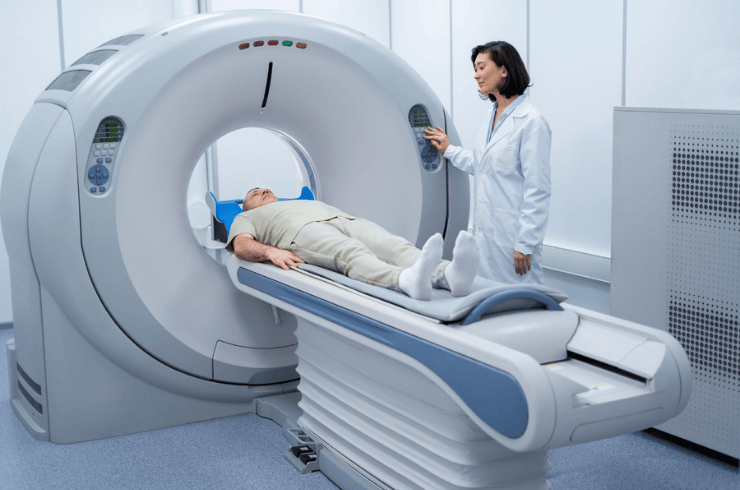
CT scans provide highly detailed images of the inside of the body. These scans are invaluable for diagnosing a wide variety of conditions, ranging from brain disorders to chest and abdominal issues, and even assessing bone fractures.
Head CT
A Head CT scan provides detailed imaging of the brain and skull, used to diagnose conditions like strokes, tumors, and traumatic brain injuries.
Orbit CT
This scan focuses on the eyes and surrounding structures. It helps diagnose conditions such as orbital fractures, tumors, or infections.
Paranasal Sinuses CT
Paranasal Sinuses CT scan is used to evaluate sinus conditions, infections, and structural abnormalities in the sinus cavities.
Petrous Temporal CT
Focused on the temporal bone and ear structures, this scan helps diagnose hearing loss and other related ear conditions.
Neck CT
A Neck CT scan is essential for evaluating conditions such as thyroid problems, cancers, and trauma to the neck area.
Spine-Cervical/Dorsal/Lumbo-Sacral CT
This scan is used to assess the spine, identifying conditions such as disc herniation, spinal stenosis, or injuries.
HRCT Chest
High-Resolution CT (HRCT) Chest scan provides detailed images of the lungs, ideal for diagnosing diseases like fibrosis, emphysema, or tumors.
Whole Abdomen CT
This scan covers the entire abdomen to detect issues with organs such as the liver, kidneys, or pancreas.
Dynamic Triple Phase Contrast CT Scan
A specialized CT scan for assessing liver function by mapping its blood supply in three distinct phases.
Dynamic 3D Whole Body Angiography
This scan uses 3D imaging to map the body’s blood vessels, helping detect blockages or abnormal blood flow.
Cardiac CT
Cardiac CT is used to visualize the coronary arteries, providing critical information on coronary artery disease, plaque buildup, and heart function.
Cardiac CT Angiography
A non-invasive test that uses CT imaging to assess coronary arteries, detect blockages, and evaluate heart health.