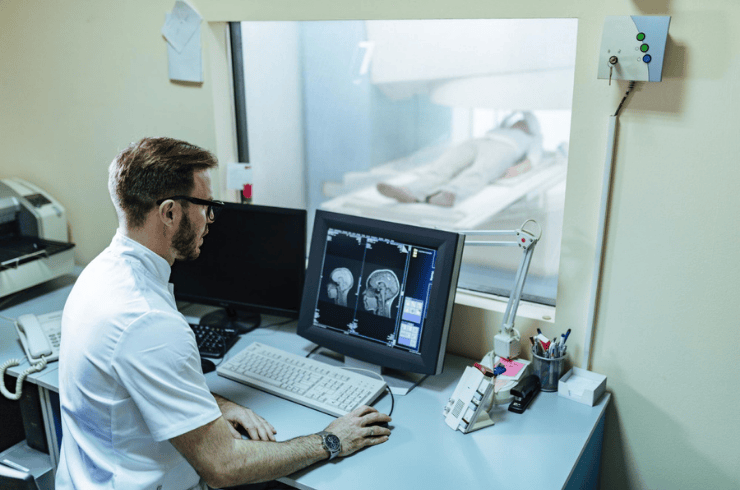
MRI scans provide high-resolution images of soft tissues, bones, and organs. MRI is critical for diagnosing neurological, musculoskeletal, and cardiovascular conditions without the use of radiation.
MRI Head/Spine/Abdomen/Chest
MRI scans of the head, spine, abdomen, or chest to diagnose a range of conditions, including tumors, infections, and neurological issues.
Epilepsy/Vertigo Protocol
Specialized MRI protocols designed to diagnose conditions like epilepsy or vertigo by evaluating brain activity and structure.
MR Angiography/Venography
Imaging of blood vessels to detect conditions like aneurysms, blood clots, and abnormal blood flow.
MRCP (Magnetic Resonance Cholangiopancreatography)
A non-invasive MRI procedure to visualize the bile ducts, gallbladder, and pancreas to diagnose issues like blockages or stones.
Cardiac MRI
Cardiac MRI provides detailed imaging of the heart, aiding in the diagnosis of heart diseases such as heart failure, myocardial infarction, or congenital conditions.
MR Spectroscopy
An MRI-based method for analyzing the chemical composition of tissues, especially useful in diagnosing brain tumors and neurological disorders.
MR Urography
MRI technique used for imaging the urinary system, including the kidneys and ureters, for conditions like stones or tumors.
MR Mammography
An advanced imaging technique for the breast, often used in conjunction with mammography to evaluate dense breast tissue or further investigate findings.
Fetal MRI
A specialized MRI used to evaluate the health and development of a fetus, especially for identifying abnormalities.
Functional MRI (fMRI)
This MRI measures brain activity by detecting changes in blood flow, helping diagnose neurological conditions or assess brain function during tasks.